Cult
How can religion, ritual, and theatre inform cult behaviour?
Behavior
musical inspirations to listen to while you scroll
Why this matters to me
The intersection between theatre and cult communities has always intrigued me. From the age of 5 to 18, I was heavily involved with a children’s theatre company that used Scientology beliefs, such as “the emotional tone scale”, under the guise of acting training. This company also implemented what I consider cult behavior through manipulation, coercion, public humiliation, and manipulation of language to influence and control its pupils. Through my practical research, I wanted to explore commonalities between theatre groups' behaviors and cults, conveying the isolating, idiosyncratic, and insular nature of being invovled in cult behavior.
Research and Influences
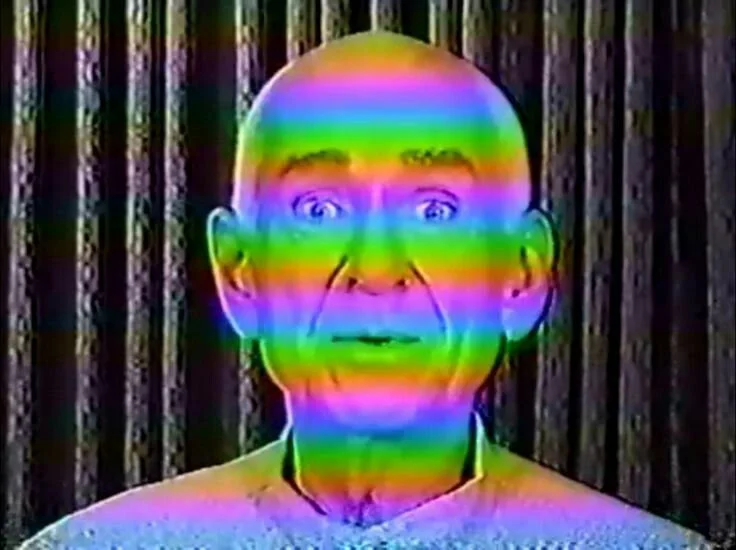
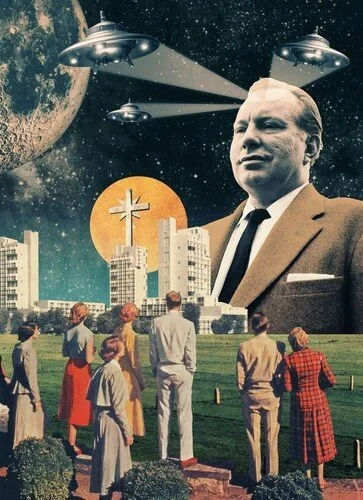
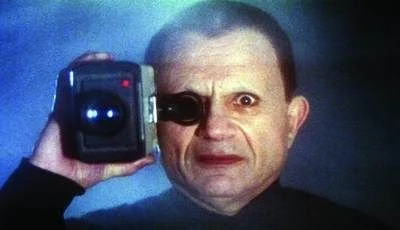
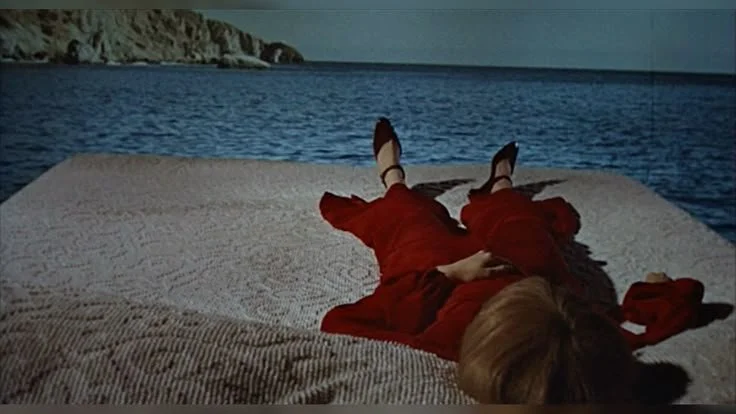
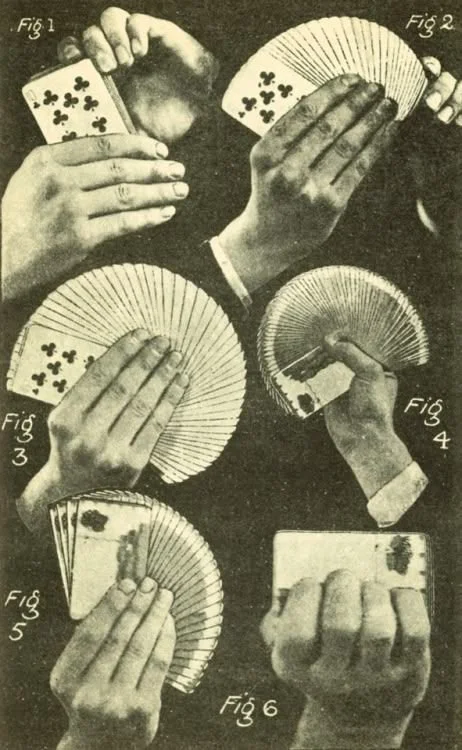
Research
AT the start of this research and development process, I consulted foundational texts on theatre and ritual. These included ‘Ritual and Performance’ by Richard Schechner and ‘From Ritual to Theatre’ by Victor Turner. I also reviewed texts to deepen my understanding of cult dynamics: ‘Cults: Faith, Healing and Coercion’ by Marc Galanter and ‘The Wrong Way Home: Uncovering the Patterns of Cult Behavior’ by Dr. Arthur Deikman.
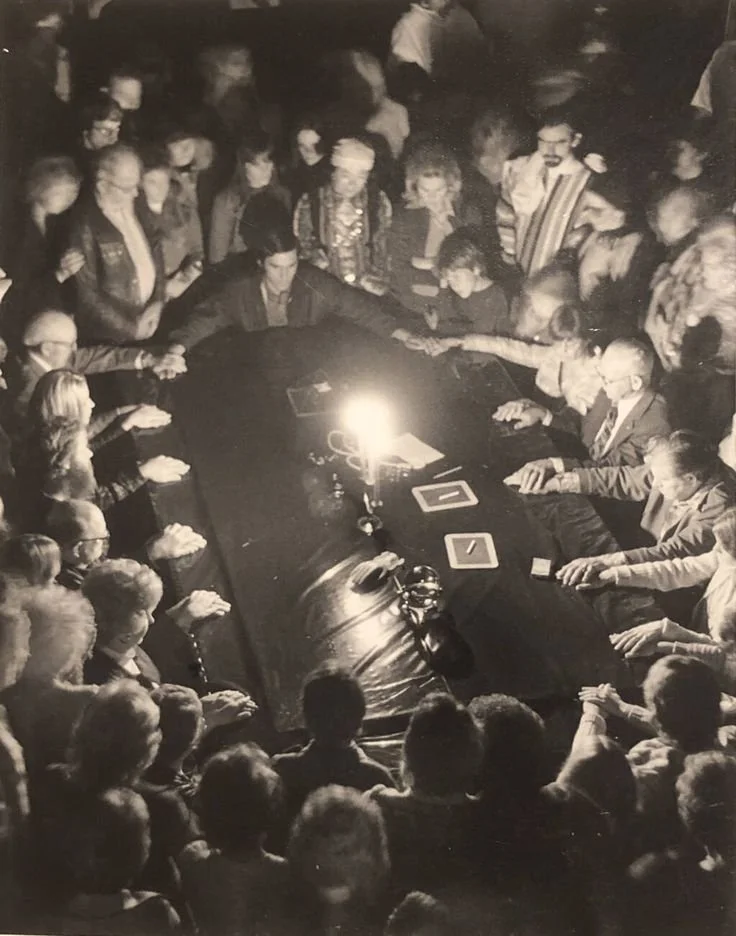
Research CTN.
When this idea first came to me, I struggled with how to turn the idea of cult and theatre into a piece of performed art. Through my research, I discovered ideas and concepts that helped my project take a clearer shape. Here are a few quotations from my research that I found informed my Piece.
“Rituals emphasize efficacy: healing the sick, initiating neophytes, burying the dead, teaching the ignorant, forming and cementing social relations, maintaining (or overthrowing) the status quo, remembering the past, propitiating the gods, exorcising the demonic, maintaining cosmic order.”- Richard Schechner, ‘Ritual and Performance’
“(…)i.e., initiations humble people before permanently elevating them, while some seasonal rites (whose residues are carnivals and festivals) elevate those of low status transiently before returning them to their permanent humbleness."- Victor Turner, ‘From ritual to theatre’
“The beliefs held in common by members of cults are a vital force in the group’s operation.”-Marc Galanter, ‘Cults: Faith, Healing and Coercion’
“Wherever there are groups, including those not thought of as cults, cult-like behavior will be found.”-Dr. Arthur Deikman, ‘The Wrong Way Home: Uncovering the Patterns of Cult Behavior’
“Certain basic cult processes are present in the familiar and legitimate activities of our established religions, large corporations, government, the media, and the professions.”-Dr. Arthur Deikman, ‘The Wrong Way Home: Uncovering the Patterns of Cult Behavior’
“From the crafty redefinition of existing words (and the invention of new ones) to powerful euphemisms, secret codes, renamings, buzzwords, chants and mantras, ‘speaking in tounges,’ forced silence, even hashtags, language is the key means by which all degrees of cult-like influence occur.”-Amanda Montell, ‘Cultish’
Influences
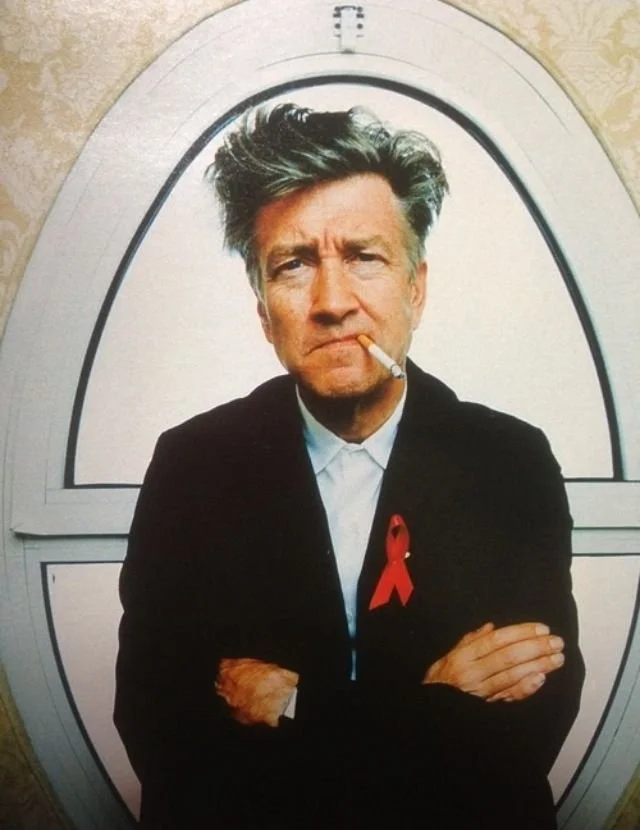
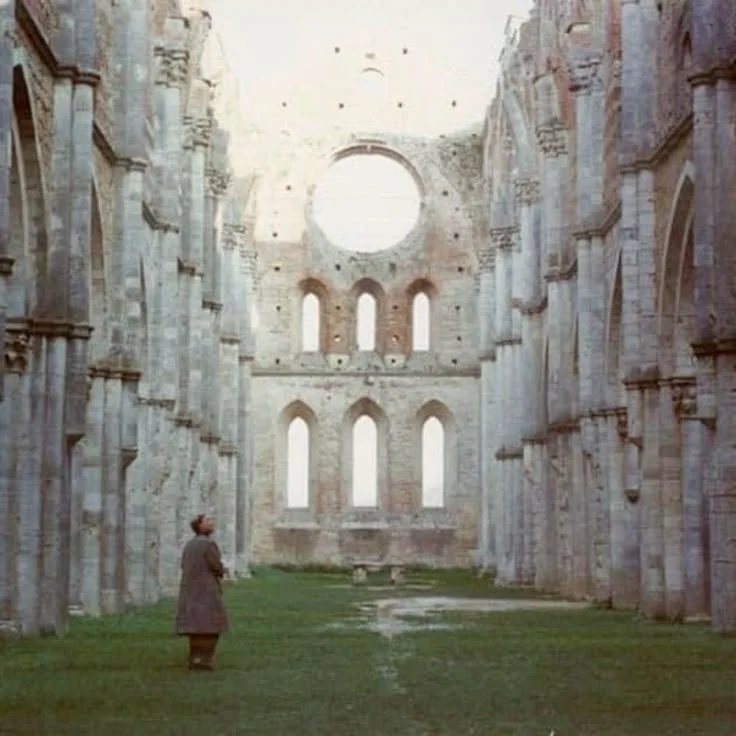
Throughout this process, I found myself more influenced by filmmakers than by theatre practitioners. I was drawn to their work and discovered that the form of film was an interesting, powerful way to explore cult dynamics.
Some inspirations include:
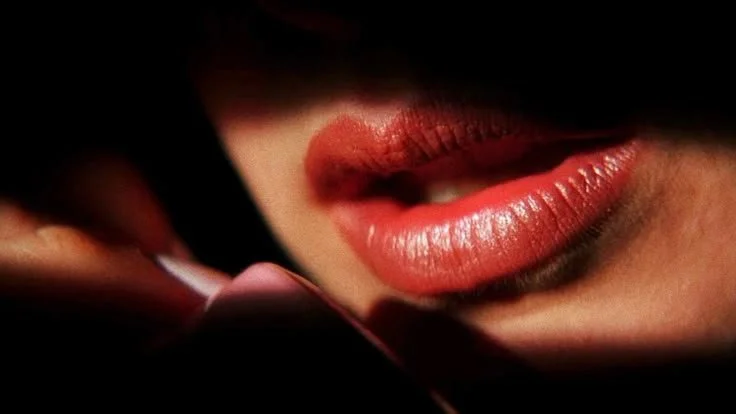
David Lynch: my largest inspiration, specifically his films Lost Highway, Mulholland Drive, and Inland Empire. His idiosyncratic, uncanny direction of actors informed my approach, with a focus on stilted, uncomfortable performances. Lynch crafts worlds that feel uneasy, dreamlike, and nonsensical, and I wanted to capture that essence in this project. Lynch's use of music particularly influenced me, so I used a droning, monotonous soundtrack to emphasize the characters’ dread. David Lynch was such a major inspiration; I used Laura Palmer’s theme from Twin Peaks to score a section of my film.
Stanley Kubrick: his films The Shining and, more specifically, Eyes Wide Shut. Kubrick’s way of transforming ordinary settings and situations into something odd or threatening informed my work. His visual world is also inspiring; his shot compositions evoke terror in the mundane through uncomfortable close-ups and slow, controlled tracking shots, which informed my filming style.
Andrei Tarkovsky: Tarkovsky has an incredibly poetic approach to filmmaking, which I was hoping to capture in my piece. His shots linger for an uncomfortable amount of time, letting you sit with the mystery and ennui in his films. Tarkovsky’s dialogue is also often nonsensical and poetic; his approach to spoken language helped guide me in writing a script that was, in itself, quite nonsensical. The Sacrifice, Nostalgia, and Mirror were particularly influential.
Peep Show: I wanted the audience to feel immersed in a cult rather than observing it from an external perspective; to do that, I drew inspiration from Peep Show, specifically its point-of-view cinematography, which shaped my approach to shot composition and editing, using the camera as an extension of the protagonist’s perspective.
Tangerine: As the only recording device available to me for this process was my iPhone, I looked to Sean Baker’s Tangerine as a practical point of reference. Shot entirely on iPhone, this film encouraged me to embrace my limitations and use the medium to create a deeper sense of intimacy in my work.
Process
I initially envisioned this process as a live performance, using a script to enact a ritual. My ideas ranged from a podcast that implemented cult vocabulary to an actor’s warm-up that would evolve into a ritualistic performance implementing cult-like techniques of manipulation and coercion. However, as I progressed through the research and development process, I realized that writing a script wasn't the most effective way for me to explore these ideas in my artistic practice, so I began searching for a text to serve as a foundation for my experimentation with my research question. This discovery led me to a scene from Gao Xingjian's experimental play ‘The Other Shore,’ which resonated with the themes I was investigating. After discovering this text and developing a passion for filmmaking this summer, I reconsidered live theatre as a medium for a cinematic approach, allowing me to investigate the relationship between performer, audience, and camera. Film let me manipulate proximity and perspective, creating a more psychologically immersive experience.
The Other Shore
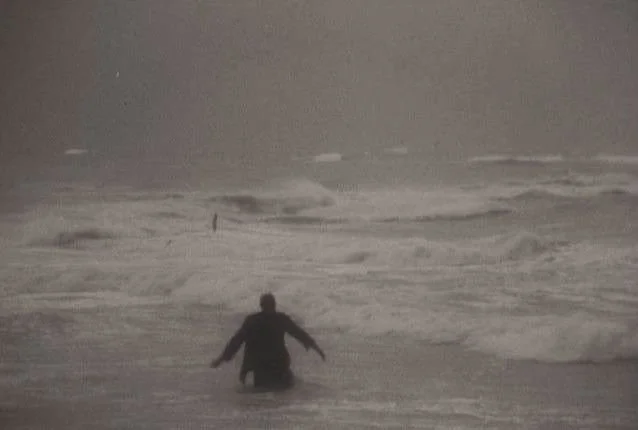
While searching for a foundational text for my project, I rediscovered a play I had first encountered several years ago: an experimental journey through the afterlife, “The Other Shore” by Gao Xingjian. The play follows a group of unnamed actors on a metaphorical journey to the “Other Shore,” drawing on Buddhist philosophies and practices that align with my research into ritual. "The Other Shore” is made up of various vignettes of life, death, love, and forgiveness; the play also examines groupthink and the mechanisms through which a shared ideology can exert control over a collective. I found that the card player scene perfectly encapsulated the dynamics common in cult groups, with hallmark techniques like coercion, manipulation, language as control, public humiliation, and reinforcement of dogma; it shows how an individual can establish authority and compel a group to do their bidding. Adapting the script into a short film required significant changes to accommodate a limited cast and fit the project into 20 minutes. In the end, I was incredibly pleased that the character dynamics and power structures came through, even with a small group, reinforcing the idea that cult dynamics can appear in any group, big or small.
Film Process
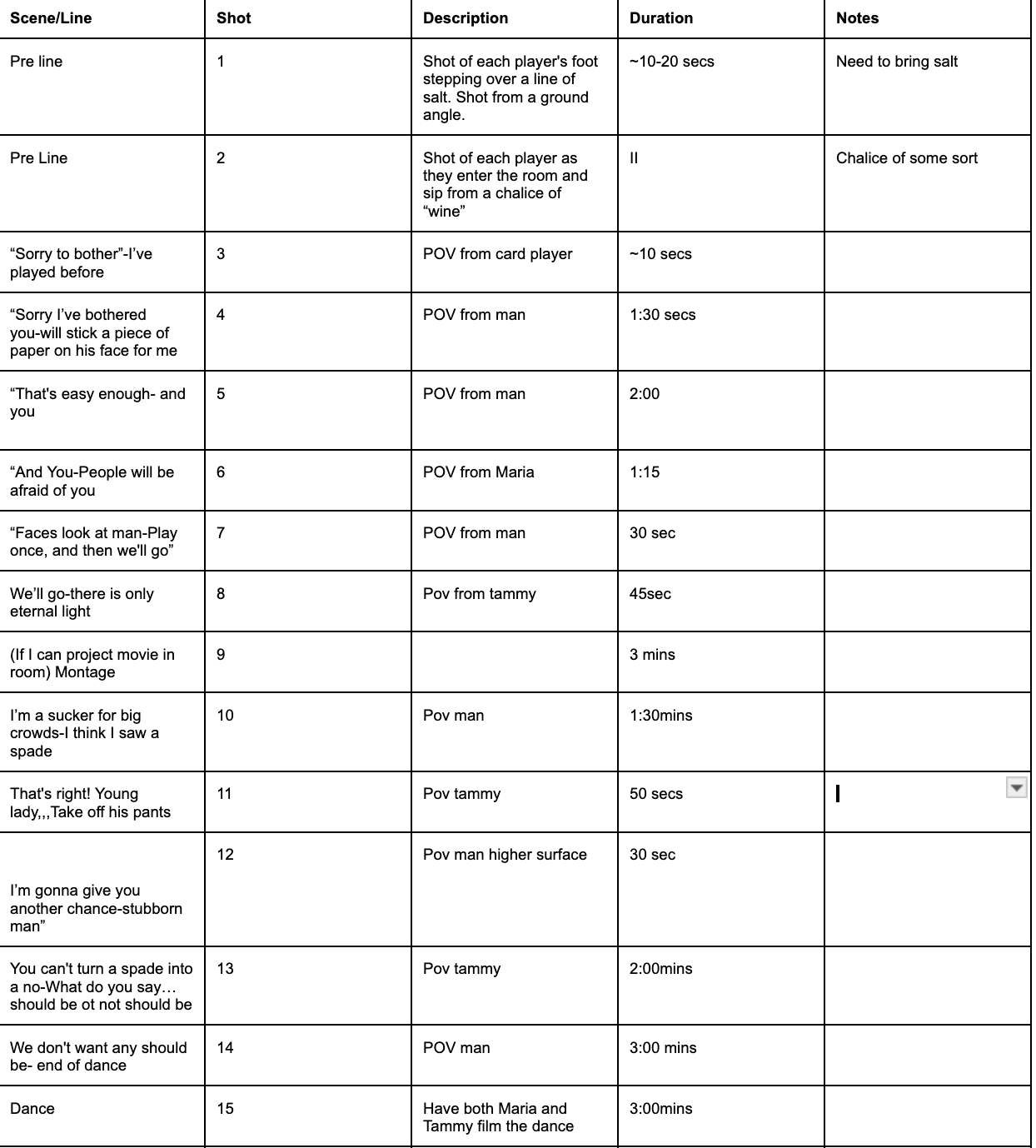
As this was my first experience directing and editing a film, I encountered several hurdles throughout the process. Initially, I struggled with shot composition, deciding what to cover in specific moments, and using the cinematic language of film to emphasize the themes I was exploring. To overcome these difficulties, I began analyzing the script and blocking each section, focusing on how to portray each character's psyche, then designing shots that emphasized their emotions and reflected the script's content. After that, I created a shot list to keep myself organized on the day of filming. I was incredibly nervous to step into a directing role, but this process taught me to be confident and assertive in communicating my creative vision